


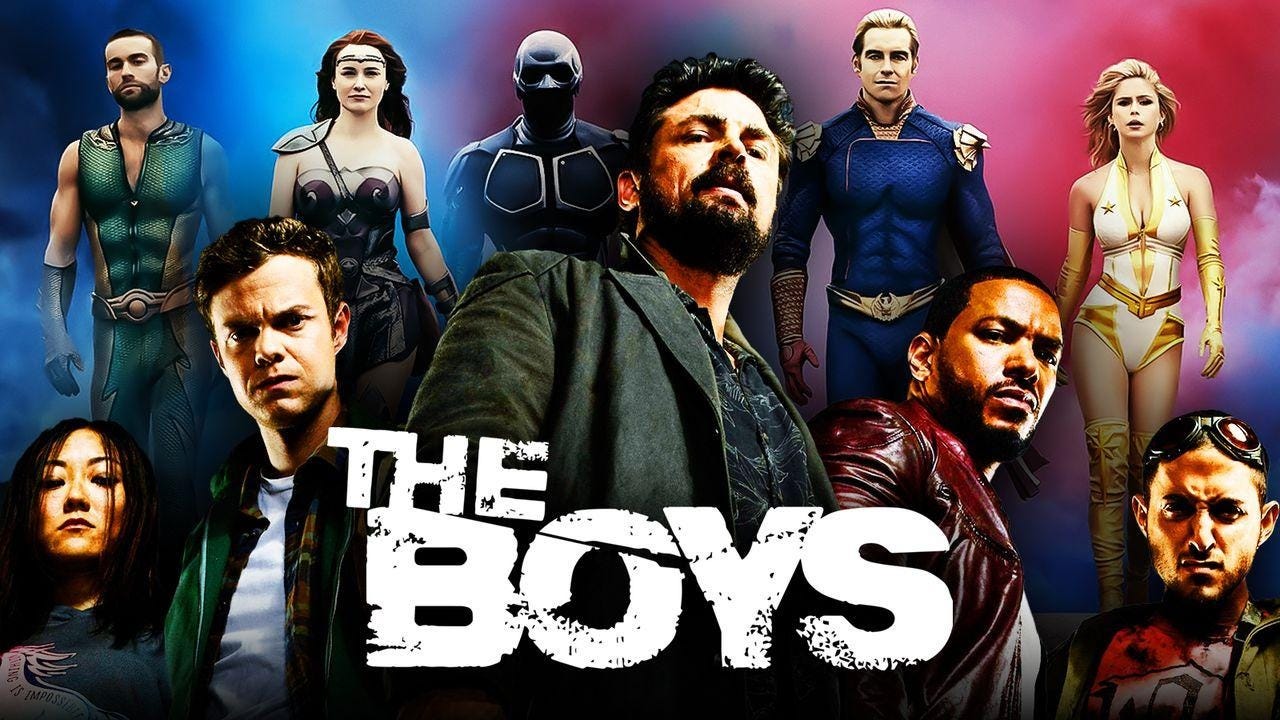
I originally planned to run a broader The Boys finale recap on Friday, but after watching, I realized I needed to sit with the ending for a few days to sort through my feelings on it. I don’t have an issue with where the story finished off. The groundwork was there1, and I enjoyed most of this final season as a whole.
But something about the finale felt off in a way I still haven’t fully pinned down. The pacing may have played a role. So might the fact that so much of the ending’s emotional burden fell on Kimiko (Karen Fukuhara), a character who has already suffered more than enough. That’s one reason I waited until the series ended to write this piece. I wanted to see how much further the show would push her.
The Making of Kimiko
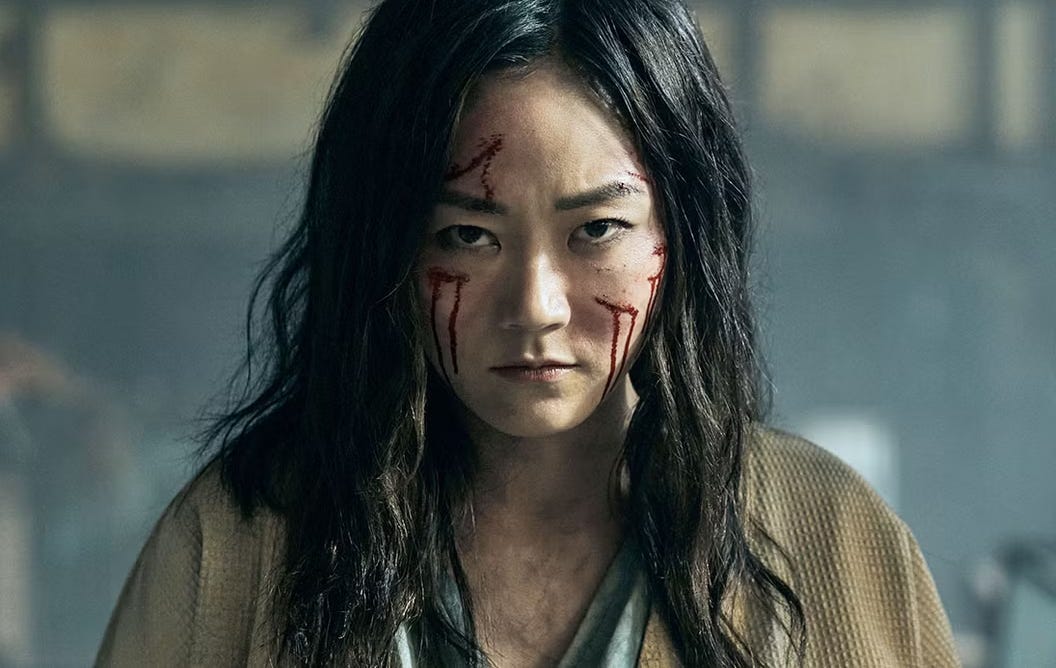
Kimiko’s dehumanization doesn’t start with Billy Butcher (Karl Urban) and the Boys. Butcher may be quick to see a weapon, but he’s definitely not the first person to look at her through the lens of utility instead of humanity.
The show – working within the framework established by the comics – gives Kimiko a backstory defined by coercion and survival rather than anything close to an ordinary childhood. She loses her parents young, is forced into combat training alongside her brother, and is ultimately folded into a terrorist organization before she has any real chance to develop an identity outside violence. By the time the show introduces her, Kimiko’s never really been given the opportunity to imagine herself not in survival mode. And with everything she’s been through, she’s lost her ability to speak.
A setup like that could easily reduce her to a tragic symbol, but to the show’s credit, it doesn’t leave her there entirely. Kimiko is given opportunities to confront the life that shaped her rather than exist as a passive product of it. She forms meaningful relationships, makes active choices about the kind of person she wants to become, and gradually begins defining herself outside the circumstances that created her. Her growth complicates the easier reading of Kimiko as little more than perpetual victimhood.
The larger question is whether The Boys allows that growth to stick when the narrative needs something else from her.
The Weapon
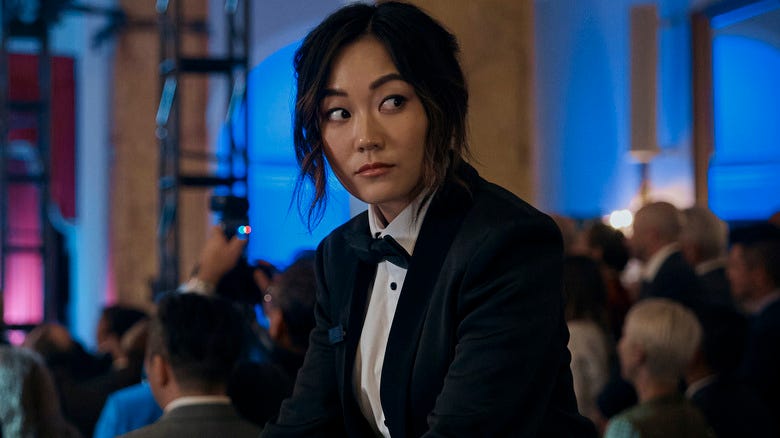
One of the reasons Kimiko makes for such a fascinating FUGC subject is that The Boys isn’t exactly a show known for handling its characters with kid gloves. Butcher’s driven by grief and obsession. Hughie Campbell (Jack Quaid) spends much of the series vacillating between insecurity and rage over his loss. Homelander’s (Antony Starr) entire worldview is warped by a pathological need for the love he was deliberately denied as a child. Trauma is what makes this world go round. Kimiko’s distinction isn’t that she has trauma. It’s how the show places her outside anything resembling personhood.
When we first meet her, she isn’t introduced as a woman in crisis or even as someone in need of help. Instead, she’s positioned as volatile and barely tethered to normal human interaction after years of captivity and exploitation. Butcher’s reaction says everything. He doesn’t see a traumatized survivor; he sees a tactical advantage.
That puts her in direct contrast with Annie January a.k.a Starlight. Both are products of Compound V, but Annie represents the version Vought knows how to market: polished, camera-ready, conventionally heroic. Her powers grant her entry into The Seven, where even exploitation comes dressed up as opportunity. Kimiko represents the version no one can monetize cleanly. She’s what happens when that same system produces something messy and harder to control, making her value immediately tied to what kind of havoc she can wreak.
Even as the series gives Kimiko more opportunities to make choices, that framing never really disappears. She doesn’t just endure violence on The Boys; she repeatedly hurls herself directly into it, taking on punishment that would permanently take out almost anyone else, only to heal and do it again. Her regenerative abilities make her uniquely useful in that regard, basically turning her into the team’s most disposable asset because the damage never has to stick physically.
By the final season, she willingly subjects herself to painful radiation treatments to acquire Soldier Boy’s abilities. That is agency, at least on paper, but the alternative is what exactly? Without her, there’s no viable plan to stop Homelander. The show may posit that decision as choice, but it still reinforces the same idea: Kimiko’s greatest value lies in how much suffering her body can absorb.
A Voice of Her Own?
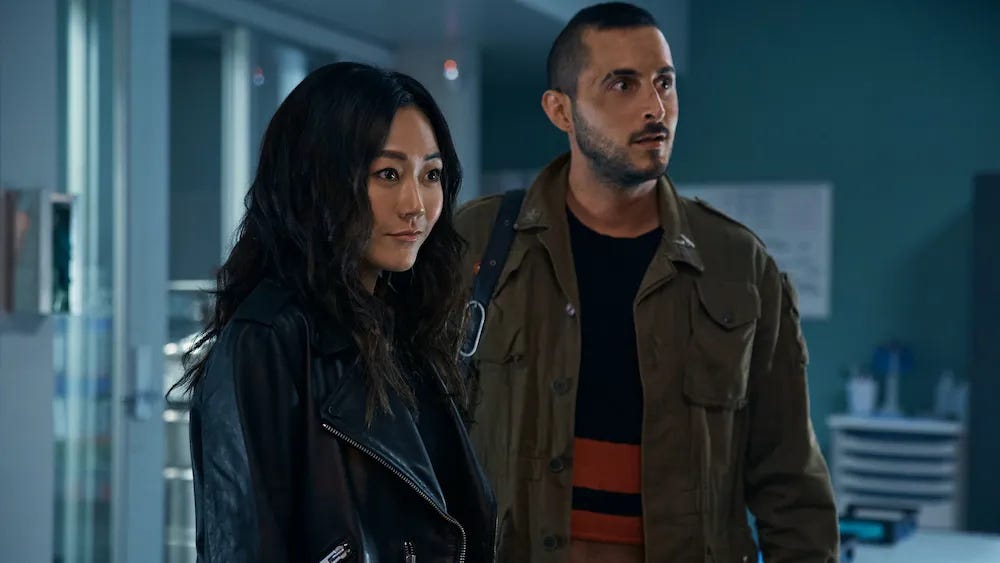
For much of The Boys, Kimiko’s muteness becomes one of the most effective parts of her characterization. The show never treats her as voiceless in the broader sense – she communicates through expression, body language, sign, and deeply felt relationships. Her interiority comes through clearly enough that the eventual restoration of her speaking voice should feel like a meaningful step forward rather than a gimmick.
Instead, the final season introduces a version of Kimiko that often feels strangely out of sync with the woman the show spent years developing. The Boys already has another mute character in Black Noir, so we understand that silence itself is not being framed as some condition that automatically requires emotional resolution in this world. Kimiko finally speaking could have deepened her arc. Handing that long-awaited voice a steady stream of crude sexual remarks and wildly inappropriate porn jokes during strategy meetings suggests a writer’s room far more interested in easy shock humor than honoring the emotional work already invested in the character.
That likely explains why so much of the backlash centered less on Kimiko speaking and more on how she was written once she did. A character who explicitly references therapy and emotional self-work suddenly behaving like she can’t suppress every intrusive thought long enough to get through a serious conversation is jarring. It’s not revelatory, it’s regression.
Then the show doubles down and takes her voice away again after Frenchie’s (Tomer Capone) death, creating an even uglier implication. If speech was meant to reflect healing or some reclaimed sense of self, tying its disappearance to the loss of a man reduces years of emotional progress to romantic devastation. For a character whose entire arc has been about fighting to become more than the pain imposed on her, that’s a deeply frustrating place for her to end up.

After five seasons and seven years, you hope a show understands its characters well enough to land them somewhere that feels earned, even if not entirely happy. I never doubted Kimiko would take out Homelander. If anything, that inevitability is probably why the finale left me a little cold. The question mark in my mind was always what came after for her.
I knew better than to expect some neat domestic fantasy where she and Frenchie disappear into a life of three kids and a Bernedoodle like she once fantasized. The Boys was never going to hand Kimiko the kind of clean, conventional happy ending reserved for someone like Annie. At the same time, watching her simply say goodbye and head off on her own didn’t fully work for me either.
But maybe that discomfort and ambiguity is the point. Kimiko survives. She chooses herself, at least in theory. Still, after years of watching the show define her through suffering, violence, sacrifice, and emotional loss, it’s hard to know whether that final image reads as liberation or just one last version of abandonment.
In my opinion. I know there’s a ton of online chatter.